J&R Federal Way Concrete ConstructionJ&R Federal Way Concrete Construction(253) 652-2604

Concrete Contractor in SeaTac, WA - Driveways and Slabs on a Solid Base

J&R Federal Way Concrete Construction is a concrete contractor working in SeaTac, WA. We pour driveways, patios, walkways, steps and garage floors for homeowners, and build footings, foundations and parking lots for homes and small businesses.

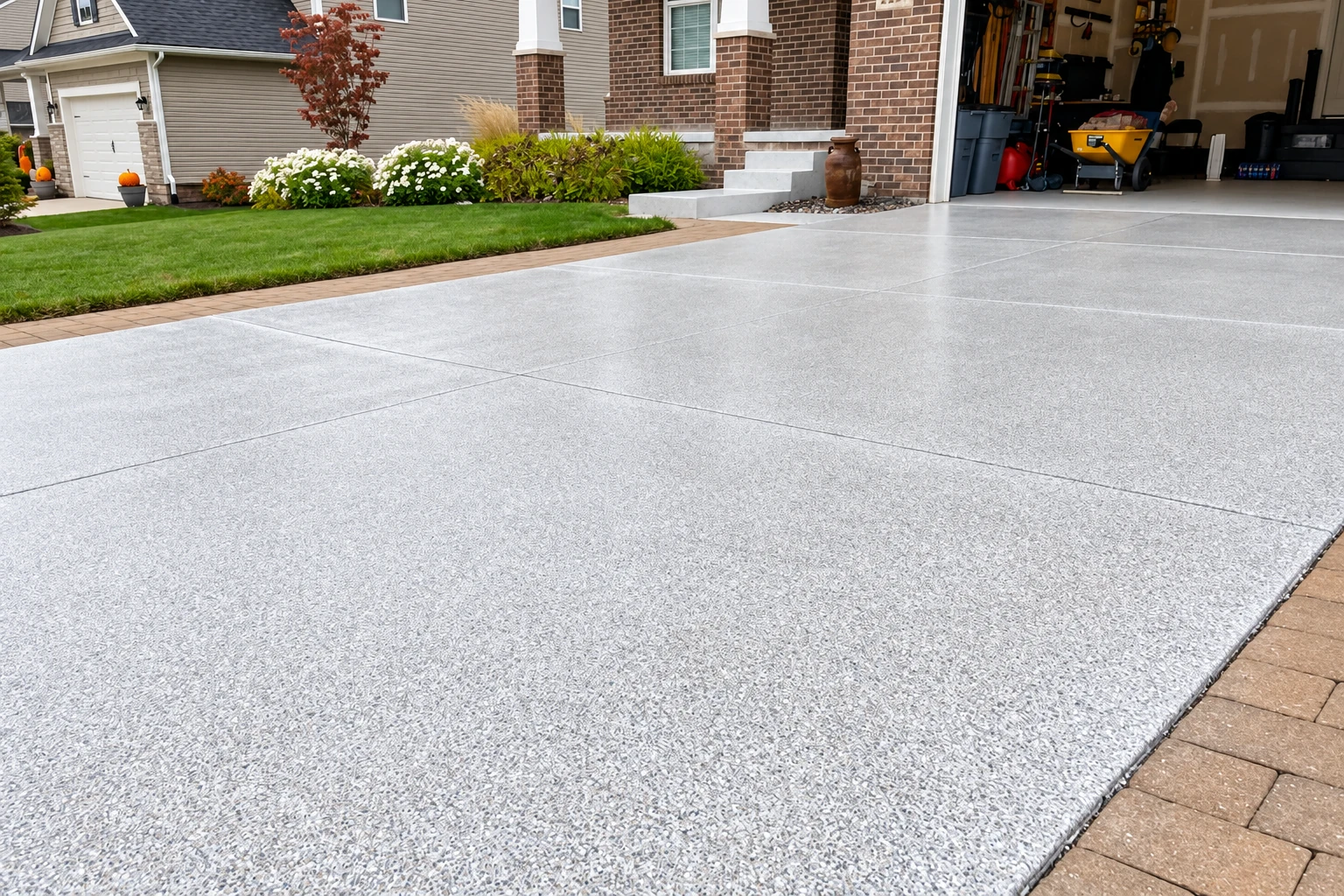
A broad light-gray exposed-aggregate concrete driveway with control joints leads to a brick house and open garage.

What concrete work in SeaTac usually looks like

SeaTac sits just north of our base in Federal Way, between Des Moines and Burien, so it's an easy drive for our crew. Like everywhere we work, most calls come from homeowners, and some come from small business owners who need a lot, a walk or a slab.

On house lots, the work is mostly what you'd expect around homes that have been lived in a while. Driveways crack into plates, patios tip toward the back door, front steps pull away from the house and garage floors wear out. Most of that is replacement, not new ground, so a job here usually starts with breaking out the old slab and seeing what's under it, because the dirt we find decides how much digging and rock go in before we pour.

Concrete services we offer SeaTac homes and businesses

We do the full range of concrete work in SeaTac, from a driveway or a back patio to the footings and foundations under an addition, plus lots and walks for small businesses. I look at every job myself before we plan it, because the ground under the slab and where the water goes decide how it's built. I write the estimate on site, then I'm there running our crew while we form, pour and finish. Most homeowner calls are for flatwork, the driveways, patios, walks and floors that sit flat on the ground.

  • Concrete driveway building

    Driveways usually come to us cracked, sunken or too narrow for today's cars. We tear out the old slab, pack a firm subgrade, the ground it sits on, and pour new.

    Explore service
  • Concrete patio construction

    Plenty of backyards have worn lawn or tired pavers where a patio would actually get used. We pour the patio with a fall away from the house so water runs off, not toward it.

    Explore service
  • Stamped concrete services

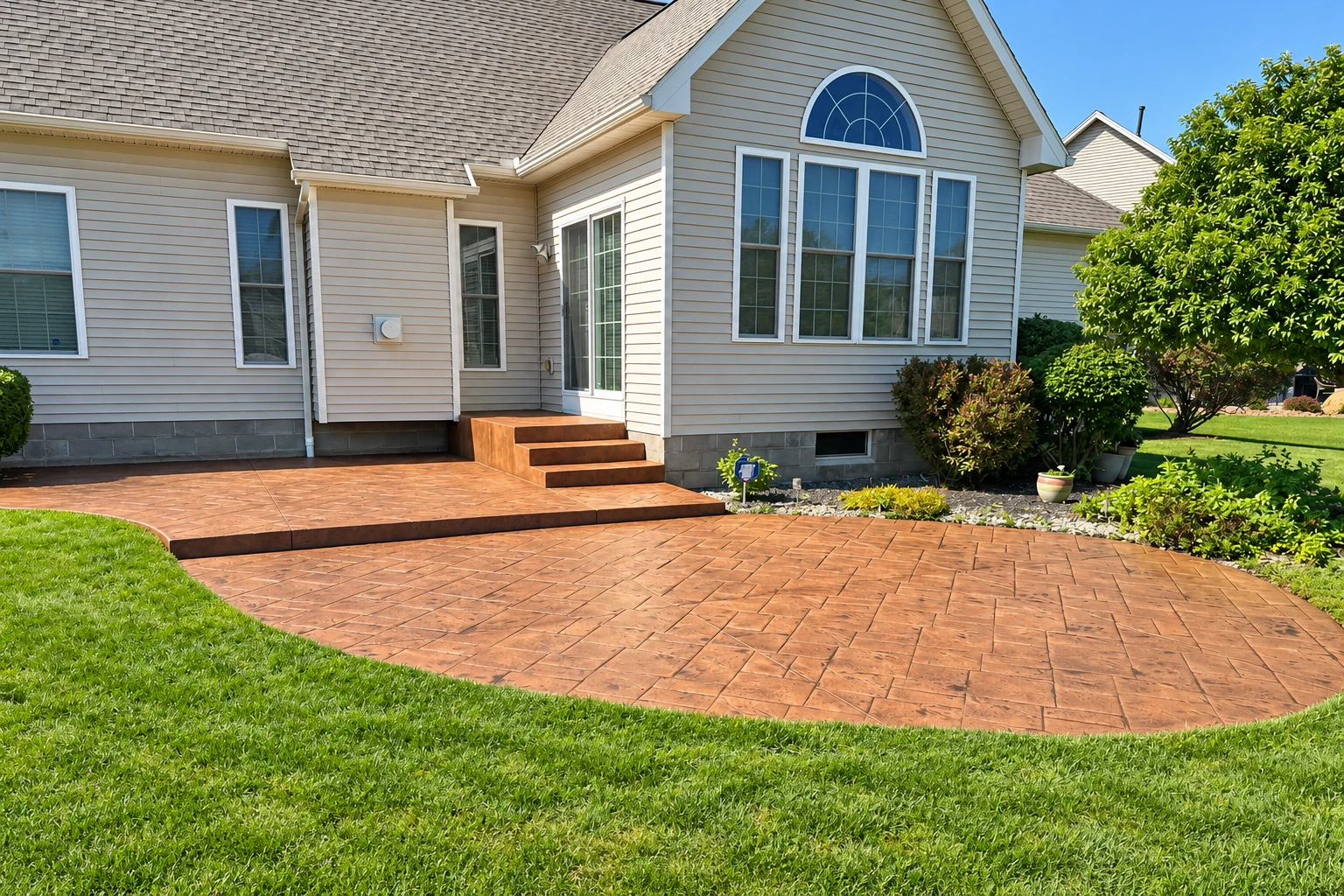
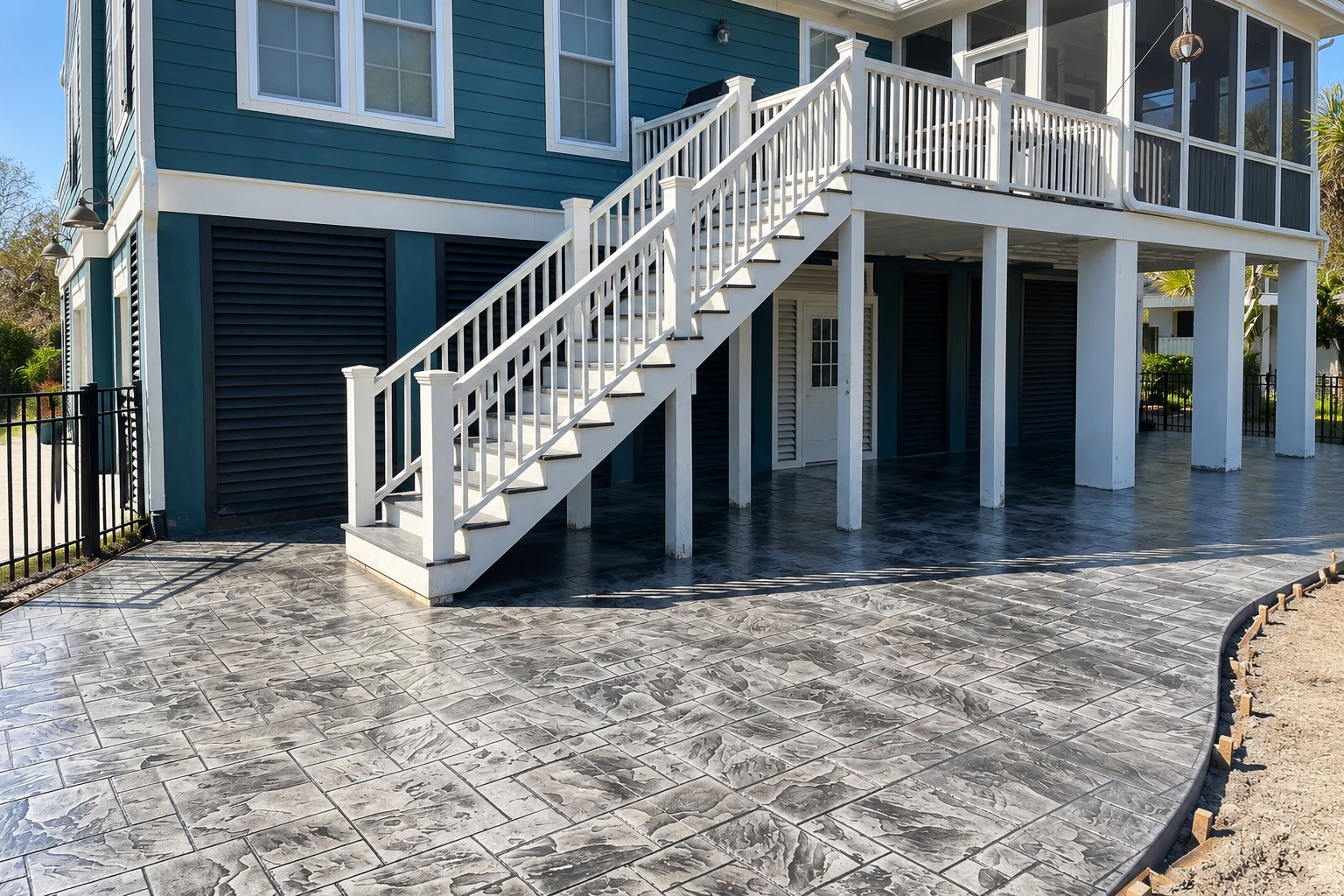
    When you want a patio that looks like stone or brick, stamped concrete gets you there with less upkeep. We press the pattern in while the slab is soft, then seal it.

    Explore service
  • Concrete sidewalk building

    Front walks often lift or settle into trip edges where roots or loose fill got underneath. We tear out the bad sections, pack the base and pour a level walk.

    Explore service
  • Garage floor concrete

    Garage floors in older houses tend to be cracked, stained and sloped the wrong way. We break out the old slab and pour a new floor that sheds water toward the door.

    Explore service
  • Decorative concrete

    Some homeowners want color, a scored pattern or a smooth finish on the slab people see first. We pick the finish with you on site, based on how the slab gets used.

    Explore service
  • Concrete retaining walls

    Sloped yards drop soil onto driveways and patios when nothing holds the grade back. We pour walls with rebar, the steel that holds concrete together, on proper footings with drainage behind them.

    Explore service
  • Concrete floor installation

    Shops, basements and outbuildings need a floor that stays flat under shelving, tools and foot traffic. We set the base, place the steel and finish the slab for how you'll use it.

    Explore service
  • Concrete pool decks

    Pool decks take bare feet, splashed water and dragged furniture. We give them a textured finish so they're not slick when wet, and slope them so water runs away from the pool.

    Explore service
  • Concrete steps construction

    Front and back steps often crack, settle or pull away from the house before anything else does. We form and pour new steps at an even height on a packed base.

    Explore service
  • Slab foundation building

    Garages, additions and outbuildings on house lots often sit on a slab foundation. We dig, pack and form to the plans, then pour once the forms and base have been checked.

    Explore service
  • Foundation installation

    When you add a room or build new, everything above rides on the foundation. We take on the foundation work a lot of crews pass on, built to the plans on firm ground.

    Explore service
  • Concrete parking lot building

    Small business owners need a lot that takes daily traffic without breaking up at the edges or holding puddles. We pour thicker where cars turn and slope the lot to drain.

    Explore service
  • Concrete footings

    Decks, porches, posts and additions rest on footings, the concrete pads that spread weight into the ground. We dig them to the depth the plans call for and pour on firm soil.

    Explore service
  • Foundation raising

    When part of a house or slab settles, it shows up as sticking doors, cracked walls and gaps. We find out why it sank, then lift it back and give it solid support.

    Explore service
  • Concrete cutting

    Adding a drain line, a doorway or a wider driveway often means cutting into existing concrete. We saw clean, straight cuts so the new work meets the old slab neatly.

    Explore service

Working in SeaTac: permits, licenses and what sets the price

Two things get settled before we set a date in SeaTac. One is what the city needs from your job, and the other is whether your contractor is set up to work here. After that, it's the job itself.

Who to ask about permits in SeaTac

Permit questions go to the City of SeaTac's Permit Center, at 206-973-4750 or permitcenter@seatacwa.gov. Its checklists cover decks, drainage control, new homes, additions, remodels and re-roofs. Driveways and patios aren't named on that list, so we don't guess. Before we schedule, we check which office covers your address, and when the job needs a permit, we handle the application and plan the start date around the wait.

You can check two things about any contractor before you sign. Washington requires every construction contractor to register with the state Department of Labor & Industries, and state law also requires them to be bonded and insured. SeaTac also requires a city business license from businesses that work in the city from somewhere else, not just ones based inside city limits. Ask a contractor for both.

  • If your job needs a permit, it sets the start date.
  • Every Washington construction contractor must register with L&I.
  • SeaTac's business license applies to contractors based outside the city too.

What sets your price and your schedule

Your price comes down to size, what's there now and what's under it. Tearing out an old slab costs more than pouring on open ground, and a soft or loosely packed base means more digging before we pour. Thickness, rebar, a slope to work around, how close the truck can get and a stamped or colored finish all move it. I write the estimate once I've seen the site.

The schedule turns on the permit, if your job needs one, then our calendar, then the concrete itself. Curing, the time new concrete needs to harden before it takes weight, decides when you can walk on it again, and driving on it comes later. We tell you before the pour what to expect, so you can plan around a driveway that's out for a bit.

  • Tear-out and base work usually move the price more than the finish.
  • A stamped or colored finish adds cost over a plain one.
  • Curing time decides when the driveway is back in use.

Get a free on-site concrete estimate for your SeaTac job

Send the form or call (253) 652-2604, and we'll reply within one business day. The estimate is free, with no obligation. I'll set a time to come out to your SeaTac property, look at the job myself and write your estimate on site.

(253) 652-2604

What we run into on SeaTac driveways and yards

Most of what we see on SeaTac properties isn't unusual, but it decides how a job gets built. These are the conditions that come up on house lots and small business properties, and how we handle each one.

  • Old slabs on unpacked dirt

    When a driveway or patio has sunk in spots or broken into plates, the dirt under it usually got raked flat and never packed. It settled, and the slab went down with it. We dig to firm ground, bring in rock and pack it in layers before any concrete shows up.

  • Slabs that drain toward the house

    A patio or driveway that falls toward the house sends water at your foundation instead of away from it. Before we set forms, we check where water runs across your lot now and set the new slab so it carries water off, toward the yard or the street.

  • Backyards the truck can't reach

    Patios and pool decks usually sit behind the house, with a fence or a narrow side yard between them and the truck. I work out on the first visit how concrete gets back there, by wheelbarrow, chute or pump, because it changes the crew we bring and the day's plan.

  • Lots and walks for businesses

    Some of our calls come from small business owners who need a lot, a walk or a slab. That concrete takes daily traffic, so we plan its thickness, steel and drainage for cars and deliveries, not for one family's driveway.

  • New concrete next to old

    Garages, additions and decks on an existing house mean new footings or slabs poured right up against what's there. We check how the new concrete meets the old foundation and saw a clean line where they join, so the two don't fight each other.

Why SeaTac homeowners call us for concrete

I started this business in Federal Way in 2017 after years on other crews. Here's how we run a job, so you know what you're getting before you call.

The person who writes your estimate runs your pour

I come out to look at your job myself and write the estimate. That matters because what decides how long a slab lasts is what's under it, where the water goes and how the truck gets in, and I can only judge that standing in your yard. If something won't work, you hear it from me then, not after the pour.

Then I'm on site running our crew while we form, pour and finish, so the plan we talked about is the plan we build. The base is where I won't cut corners. It's buried on day one and it's the first thing a tight budget goes after, but concrete shows every shortcut sooner or later, and a bad base can't be fixed without tearing out the slab.

  • Licensed and insured, ask us

    We're fully licensed and insured, and I'm glad to show you. Ask before you sign, because it's what protects you if something goes wrong on the job, and a contractor who hesitates to answer has told you what you need to know.

  • Straight answers at the estimate

    If your old slab can't be saved, your patio won't drain where you want it, or a cheaper option will cost you later, I'll tell you at the estimate. Hearing it in your driveway beats finding out a year after the pour.

  • Tidy site, clear street

    We keep the site tidy and clean up as we go, because your neighbors share the street with our truck and forms. Mud, broken concrete and scraps get dealt with during the job, not left for you after we pack up.

  • Backed by our satisfaction guarantee

    Every job we do is backed by our satisfaction guarantee. To talk through yours, call (253) 652-2604 or fill out the form on this page, and I'll set a time to come out and look.

Questions SeaTac homeowners ask about concrete work

These are the questions we hear from SeaTac homeowners before a pour. Most come down to inspections, paperwork, cost and whether the new slab will hold up better than the old one.

How do inspections work on a building permit in SeaTac?

Each permit the city issues lists the inspections it needs, and the permit holder schedules them at each stage with the city's building services. Work can't be covered until a city inspector approves it, and a request made before 10pm gets a next-day inspection. On a concrete job, that means nothing gets poured over until it's approved, so we plan pour day around the inspection.

What paperwork should a contractor give me before a concrete job in SeaTac?

On any residential job of $1,000 or more, the state requires the contractor to give you its disclosure statement, a written notice to customers. The same notice applies to commercial projects from $1,000 to $60,000. If you don't get one, ask for it before work starts.

Can I recover losses caused by a contractor in Washington?

Yes, if you're eligible. Since July 1, 2026, people who lost money to a construction contractor's work can apply for recovery payments through L&I's contractor program. It's one more reason to hire a contractor who's registered with the state.

How much does a new concrete driveway cost in SeaTac?

Your price is set mostly by the driveway's size, the tear-out of the old slab and how much base work the ground needs, so I only give a number after I've seen it. If the budget's tight, save on the finish, since a plain broom finish, a light texture brushed in for grip, costs less than stamped or colored concrete. Don't save on the base. Call (253) 652-2604 and I'll come out and look.

What building code does SeaTac use for concrete work?

SeaTac builds to the 2021 International Codes, with its own local amendments and the state's amendments on top. If your job needs a permit, the plans have to meet those codes, and since we handle the application, that part is on us.

What causes a concrete driveway to crack, and will a new one crack too?

Most bad cracking comes from a base that was raked level instead of dug out and packed, water running under the slab, a pour in midday heat, or control joints cut late or skipped. Control joints are grooves cut into the slab so the small cracks all concrete gets as it shrinks land along a line we chose. We pack the base, check where water runs and cut joints on time, so if a hairline crack shows up, it sits in a joint and not across the middle of your driveway.

Service areas

We're based in Federal Way and work in the cities around it, including Burien, Des Moines, Kent, Tacoma and the others listed here. If your address isn't on the list, call or send the form and ask.

Ask about your location
(253) 652-2604Get an estimate